School Payroll in India: PF, ESI, TDS and Payslips Without the Month-End Rush
Monthly payroll for teaching and non-teaching staff in Indian schools: salary structure, attendance and leave, PF, ESI, professional tax, TDS and payslips.

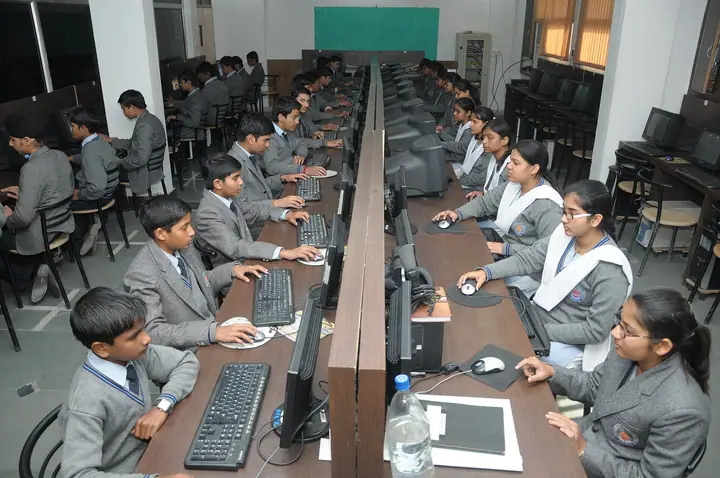
Photo: Myself (Ambuj.Saxena),(cropped by Hidro) · Public domain
In many schools, payroll is a spreadsheet that one person in the accounts office understands. It works until that person is on leave, a teacher questions a deduction, or an auditor asks how the March salary for a part-time music teacher was worked out.
Payroll in a school is not complicated, but it has a lot of small moving parts: different salary structures for teaching and non-teaching staff, leave that may or may not be paid, and statutory deductions that change with salary bands. Here is how to keep it calm.
1. Define the salary structure once
Write down every component and how it is calculated:
- Earnings: basic pay, dearness allowance (DA), house rent allowance (HRA), transport or conveyance allowance, special allowances
- Deductions: provident fund, ESI, professional tax, TDS, salary advances and loan recoveries
Most components are either a fixed amount or a percentage of basic. Once the structure is set, each employee's salary is just their basic plus the components that apply to them. This is also the point to separate structures for permanent teachers, contract teachers, and support staff such as drivers and housekeeping.
2. Know which statutory deductions apply to your school
Rules depend on your school's size, state and staff salaries, so confirm the details with your chartered accountant. In broad terms:
- Provident Fund (EPF): applies once an establishment has 20 or more employees. Employee and employer each contribute 12% of basic wages plus DA, with mandatory coverage up to the statutory wage ceiling.
- ESI: where it applies, it covers employees whose gross wages are within the ESI limit. The employee contributes 0.75% and the employer 3.25% of wages.
- Professional tax: levied by some states, with slabs and a yearly cap set by each state.
- TDS on salary: deducted under Section 192 based on each employee's projected annual income and the tax regime they choose.
- Gratuity: payable to employees with five or more years of continuous service when they leave, so it should be provided for as a liability.
The mistakes are usually not in the percentages. They come from a salary revision that pushes someone over a threshold and nobody noticing.
3. Let attendance and leave decide working days
Salary errors most often start with attendance. If staff attendance sits in one register, leave approvals in a file, and payroll in a spreadsheet, someone has to reconcile them by hand every month.
When staff attendance and approved leave feed straight into payroll, the working days and loss-of-pay days are already counted. Disputes become simple: the teacher can see which days were marked and which leave was approved.
4. Review, approve, then pay
Treat each month as a run with clear stages:
- Generate the draft payroll from attendance and the salary structures.
- Review changes from last month: new joiners, exits, increments and arrears.
- Approve, preferably by someone other than the person who prepared it.
- Pay, and record the payment date.
An approval step costs ten minutes and catches most errors before the money leaves the account.
5. Give every employee a payslip
A payslip that shows earnings, deductions, working days and net pay answers most salary questions before they are asked. Staff also need payslips for loans, visas and rental agreements, so they should be easy to download or reprint months later.
6. Keep the records audit-ready
Keep each month's payroll, approvals and payslips together, along with the salary structure that applied at the time. When an inspector, auditor or former employee asks a question two years later, the answer should be one search away.
How SchoolKonnect helps
SchoolKonnect's HR and payroll module keeps staff records, attendance, leave and payroll together. Salary components such as HRA, DA and PF are defined once as fixed amounts or a percentage of basic. Monthly payroll runs take working days from staff attendance and approved leave, go through approval before payment, and produce payslips for every employee, teaching and non-teaching alike.
Book a demo to see a payroll month with your own salary structure.