Digital Attendance in Schools: Paper Registers, QR Codes and What Actually Saves Time
Paper registers, mobile marking, QR code attendance and biometrics compared for Indian schools — and how to roll out digital attendance teachers use.
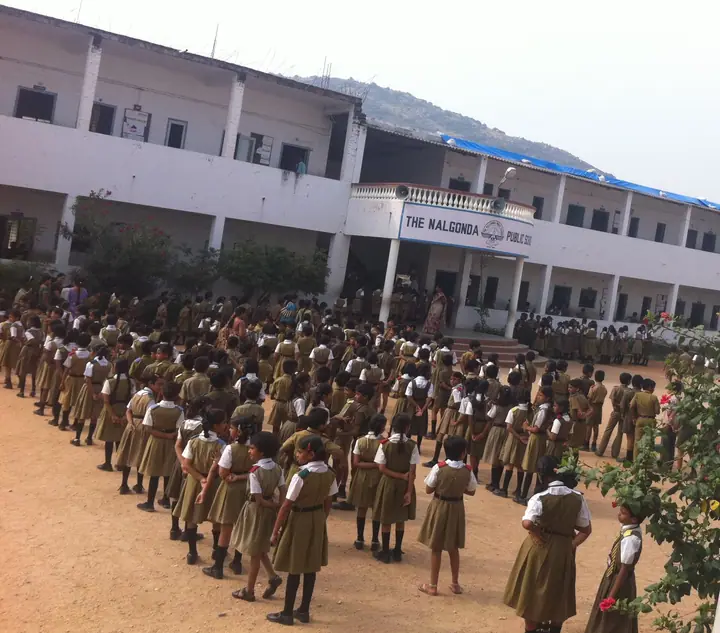
Photo: Sudhirnlg · CC BY-SA 3.0
Attendance is the one task every teacher does every day. It is also where many schools first discover that “digital” can mean more work, not less — the paper register is still kept, and someone in the office types it into a computer in the afternoon.
Done properly, digital attendance takes under a minute per class and gives the school something paper never could: a live view of who is on campus.
Why attendance matters beyond the register
- Child safety. If a child left home and did not reach school, the parents need to know in the first hour, not at 4 pm.
- Board and government requirements. Attendance percentages decide exam eligibility and feed returns such as UDISE+.
- Early warning. A student whose attendance drops from 95% to 80% over a month is telling you something.
- Payroll. Staff attendance and leave decide salaries.
The four common methods
Paper register, typed in later
Familiar and free, but the data arrives late and with errors. Nobody notices an absent child until the register is typed in, and monthly percentages take days to compile.
Teacher marks on a phone or tablet
The teacher opens the class list and marks each student. The best systems start with everyone marked present, so the teacher only changes the exceptions — absent, late or half-day. For a class of forty with three absentees, that is four taps.
This is the method that works for most schools: no hardware, no queues, and the data is live the moment it is saved.
QR code attendance
Each student has a QR code — on an ID card or in the app — and attendance is marked as it is scanned at the classroom door or the gate. It suits large schools, senior classes and events where students move between rooms. It needs a phone or tablet at the scanning point and a fallback for the student who forgot their card.
Biometric and face recognition
Fingerprint and face systems remove the card problem but add hardware, maintenance and — importantly — sensitive biometric data about children. Under India’s DPDP Act, collecting children’s biometric data needs a clear purpose and parental consent. For most schools, the extra accuracy is not worth the extra risk.
What a good attendance system should do
- Mark all present, then fix the exceptions. One tap for the class, a few taps for the absentees.
- Real statuses. Present, absent, late and half-day — not just a tick and a cross.
- School holidays marked once. Nobody should mark forty registers “holiday”.
- A live school-wide view. On roll, marked, present, absent and not-yet-marked for every class.
- Leave requests from parents that the register already knows about.
- Staff attendance in the same system, feeding payroll.
SchoolKonnect’s attendance does all of these, with QR mode available for any class.
Rolling it out so teachers keep using it
- Start with one week of both. Let teachers mark on the phone and keep the paper register for one week only. Then retire the paper.
- Set a time. Attendance marked by the end of first period, every day. The office follows up the classes that are “not yet marked”.
- Show teachers what it gives them. Monthly percentages and leave history appear automatically — no more end-of-month counting.
- Tell parents. Explain that absences will now be noticed early, and how to apply for leave in the app.
The result
Schools that move to mobile attendance typically stop compiling monthly attendance by hand entirely. More importantly, the office knows within the first hour of the day which children are not in school — and can act on it.
See how it works for your school: book a demo.